Importance Of Asset Protection: Why It Matters In India
Shlok Sobti

Importance Of Asset Protection: Why It Matters In India
You've spent years building wealth, through salary, savings, investments, maybe even a side business. But here's a question most Indians rarely ask themselves: what's your plan if someone tries to take it away? The importance of asset protection goes far beyond insurance or keeping money in a fixed deposit. It's about creating a structured, legal shield around everything you've earned so that lawsuits, creditors, or financial shocks don't wipe out decades of effort overnight.
In India, where property disputes, business liabilities, and personal guarantees can spiral quickly, protecting your assets isn't a luxury reserved for the ultra-rich. It's a necessity for every salaried professional and serious investor who wants their wealth to outlast short-term risks. Yet, most people focus entirely on growing their money and ignore the equally critical task of defending it.
That's exactly why Invsify exists, to help you not just grow and optimize your wealth, but also protect it with conflict-free, AI-powered advisory backed by SEBI registration. This article breaks down what asset protection actually means in the Indian context, why it matters more than you think, and practical steps you can take to safeguard what's yours.
Why asset protection matters in India
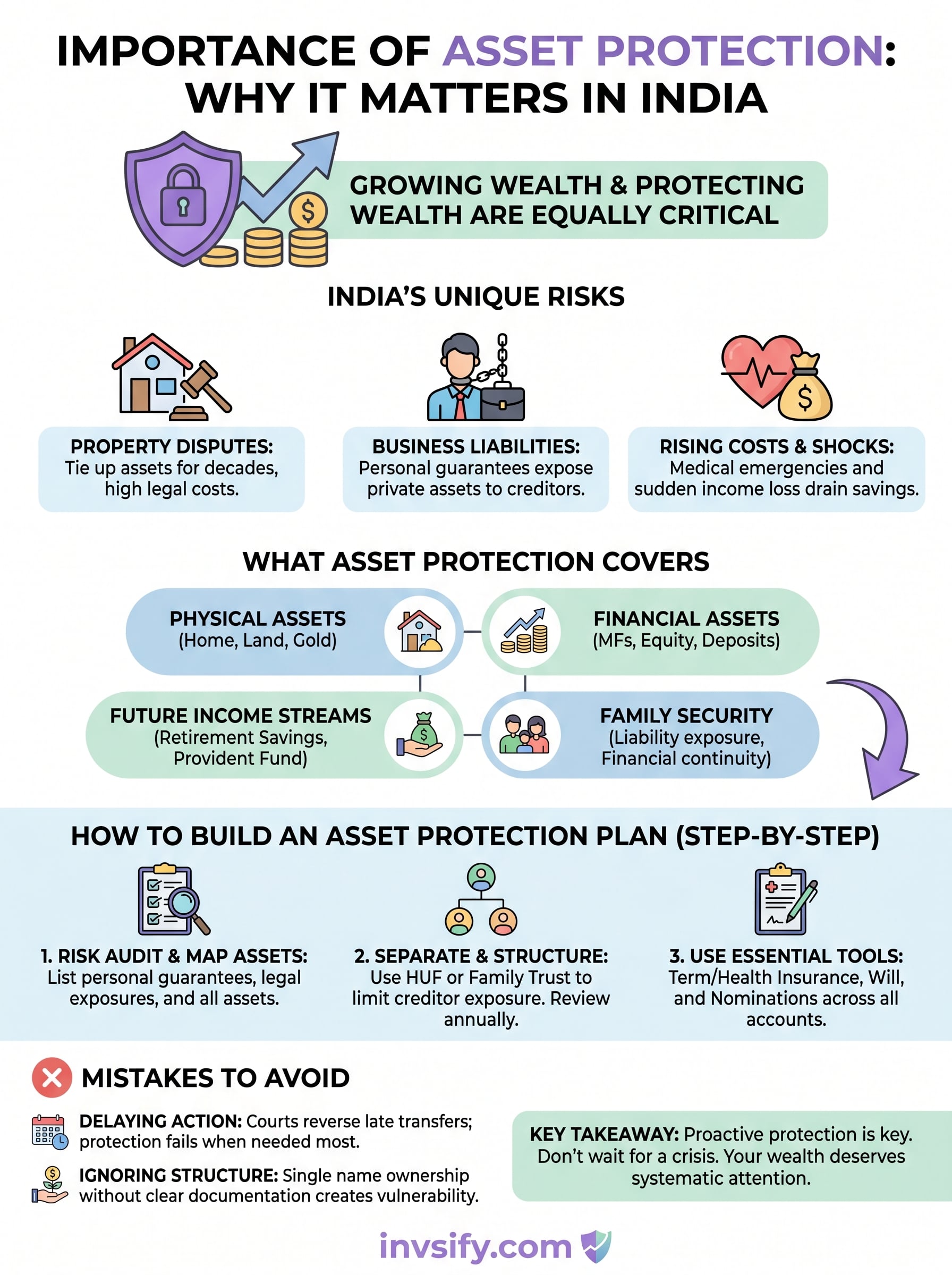
India's legal and financial environment creates specific, real threats to personal wealth that most people routinely underestimate. Property disputes alone can drag on for decades in Indian courts, tying up assets and generating substantial legal costs that drain even carefully built portfolios. Add the ease with which creditors can legally pursue personal guarantees on loans, and you have a landscape where wealth accumulated over a lifetime faces pressure from multiple directions at once. Without a deliberate protection framework, even a strong income and solid investment portfolio remain exposed.
The legal risks Indian professionals face
If you run a business, co-sign a loan, or stand as a personal guarantor for any credit facility, your personal assets are directly exposed to business liabilities. A lender can attach your property, fixed deposits, or equity holdings if a business defaults, regardless of how carefully you built those assets. This is one of the core reasons why the importance of asset protection cannot be overstated for salaried professionals and small business owners in India; it is an immediate, practical concern rather than a theoretical one.
A personal guarantee converts your private wealth into a business liability the moment repayment stops.
Why income alone will not protect you
Growing your income feels like security, but income without a legal protection structure is just a larger target for creditors and disputes. Medical emergencies, unexpected litigation, or a sudden loss of employment can drain years of savings faster than most people anticipate. In India, where health and legal costs are rising sharply, the gap between earning well and protecting well can be financially devastating. Your investments, property, and liquid assets need structural safeguards, not just continued accumulation, because wealth without deliberate protection stays permanently vulnerable to events outside your control.
What asset protection covers for Indian households
Asset protection covers a broader range of assets than most people realize. For Indian households, it spans physical property, financial investments, and future income streams, all of which face distinct risks depending on your personal and professional circumstances. Understanding what falls under this umbrella helps you identify gaps before a threat materializes.
Physical and financial assets
Your home, land, fixed deposits, mutual funds, and equity holdings all qualify as protectable assets. In the Indian context, property disputes and inheritance conflicts are among the most common threats to physical assets, while creditor claims put financial portfolios at risk. Common assets Indian households typically need to protect include:

Mutual funds and equity portfolios
Provident fund and retirement savings
Gold and jewelry holdings
Liability and family security
Asset protection also covers your personal liability exposure and your family's financial continuity in the event of illness, disability, or death. Term insurance, health coverage, and structured succession planning are core components here, not optional add-ons.
Protecting your family's financial future is as much a part of the importance of asset protection as shielding your portfolio from creditors.
Without these layers in place, a single adverse event can unravel years of disciplined wealth building faster than you expect.
How to build an asset protection plan step by step
Building an asset protection plan starts with mapping what you own and what threatens it. Before restructuring anything, list every asset alongside the liabilities and risks that could reach it. This gap analysis reveals where the importance of asset protection applies most urgently to your situation.
Start with a risk audit
Your first step is identifying every personal guarantee, business liability, and legal exposure you carry today. Ranking risks by urgency helps you prioritize which gaps to close first rather than spreading effort too thin.
Key questions to answer during your audit:
Do you have active personal guarantees on any loans?
Are your assets held solely in your name?
Does your family have adequate life and health coverage?
A thorough audit often uncovers risks you didn't know existed until you put them on paper.
Separate and structure your assets
Once you've completed the audit, separate assets by purpose and legal structure wherever possible. Holding investments through a HUF or family trust structure can limit creditor exposure under Indian law.
Review your ownership structures annually as your assets and liabilities change. A plan that protects you today may leave new gaps if your income, property, or business situation shifts over time.
Tools that strengthen asset protection in India
Several practical tools directly address the importance of asset protection for Indian households. Choosing the right combination depends on your current asset base, liability exposure, and family situation, so understanding what each tool does helps you apply them in the right sequence.
Insurance and legal structures
Term life insurance and comprehensive health coverage form the first line of defense for most Indian families. Beyond insurance, legal ownership structures like a Hindu Undivided Family (HUF) or a private family trust can separate personal assets from business liabilities, limiting creditor reach under Indian law.

Tool | Primary Purpose |
|---|---|
Term Insurance | Protects family income continuity |
Health Insurance | Covers medical cost shocks |
HUF Structure | Limits personal creditor exposure |
Family Trust | Controls asset transfer and succession |
Nomination and Will | Prevents inheritance disputes |
The right legal structure can make the difference between assets that stay protected and assets that remain permanently exposed.
Registering nominations across all financial accounts and investments is one of the simplest yet most overlooked steps. Pairing nominations with a legally valid will ensures your assets transfer cleanly to intended beneficiaries without requiring court intervention.
Mistakes to avoid with asset protection
Even when people acknowledge the importance of asset protection, they routinely make errors that leave costly gaps open. Understanding what not to do is just as critical as knowing which tools to use, and overlooking common mistakes can silently undermine years of careful wealth building.
Delaying action until a threat appears
Most people wait until a dispute, default, or health crisis forces the issue. By then, transferring or restructuring assets to shield them is either legally challenged or simply too late. Courts in India can and do reverse asset transfers made after a liability arises, treating them as fraudulent conveyance. Starting your plan early is the only way to ensure protection holds when you actually need it.
Build your asset protection plan before a threat appears, not after.
Ignoring ownership structure and documentation
Holding all assets in a single name without nominations, a valid will, or a trust structure creates unnecessary vulnerability. If you co-own property or investments, unclear documentation alone is enough to trigger lengthy inheritance disputes that erode the very wealth you built. Review your ownership records regularly, update nominations after major life events like marriage or the birth of a child, and keep your will current so your family avoids court intervention entirely.
Key takeaways
The importance of asset protection comes down to one core idea: building wealth and defending it are equally necessary, and you cannot afford to treat one as optional. Every asset you own, from property to mutual funds to retirement savings, carries some form of legal or financial exposure that grows over time if you leave it unaddressed. Auditing your risks, structuring your ownership correctly, and maintaining the right insurance and legal documents are not one-time tasks; they require regular review as your life and liabilities change.
Waiting for a crisis to appear before acting is the most expensive mistake you can make. Proactive protection gives courts and creditors far less to work with, while reactive restructuring often fails precisely when you need it most. Your wealth deserves the same systematic attention you give to growing it. If you want personalized, conflict-free guidance on protecting and optimizing what you've built, get started with Invsify today.